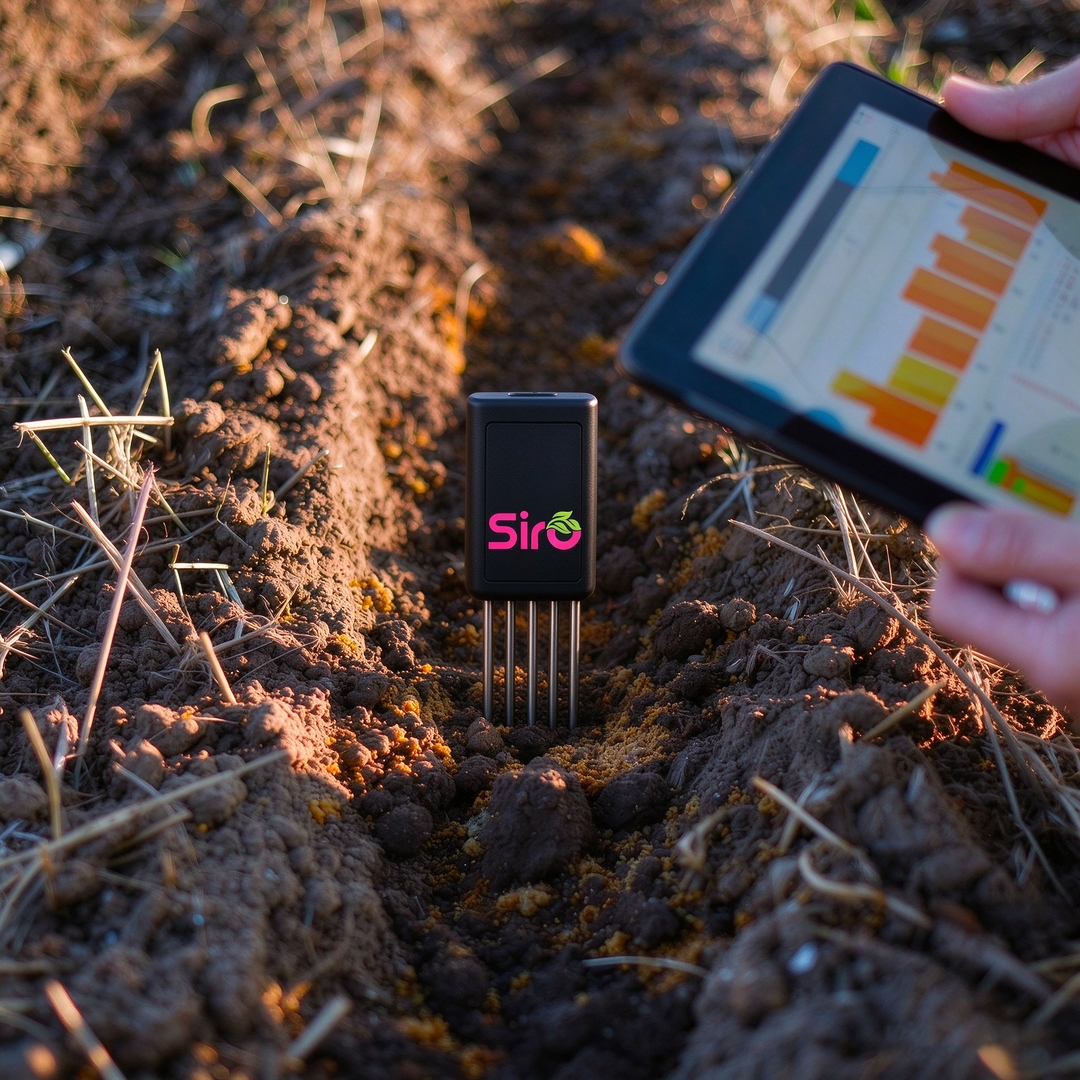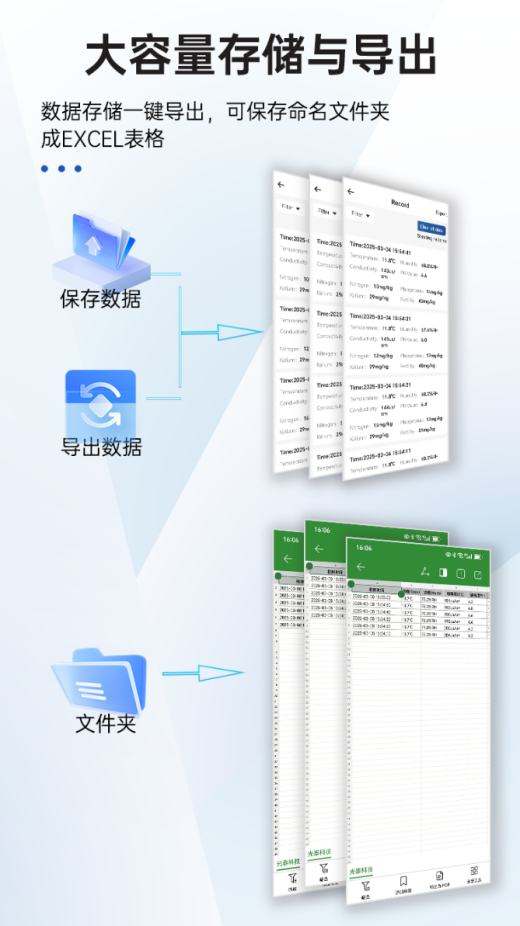
Key takeaways
- pH is a gate, not a nutrient: it decides whether nutrients you already paid for are available to the root.
- EC is the reading Gulf farms should watch most closely — salinity, not acidity, is the usual yield limiter here.
- Moisture turns irrigation from a schedule into a decision, and is the fastest water saving available.
- Nitrogen is a schedule; phosphorus and potassium are a stock. Treat them differently.
Before you read anything: depth, calibration, consistency
Three habits decide whether your numbers mean anything, and none of them involve the instrument.
- Fix the depth. 20 cm for annual vegetables and field crops; 40–60 cm for tree crops and vines. A reading without a depth is not a measurement.
- Calibrate at the start of each sampling day. Five minutes with the buffer solution. Drift is the main source of bad data, not sensor quality.
- Sample at the same point, at the same time of day. Mid-morning, before the day's irrigation, is the standard. Readings taken an hour after fertigation describe the fertiliser, not the soil.
pH: the gatekeeper
Soil pH controls solubility. Between roughly 6.0 and 7.5, most nutrients are freely available. Above 8.0 — which describes a large share of calcareous soils across the Arabian Peninsula — phosphorus ties up with calcium, and iron, manganese and zinc become unavailable even when a laboratory confirms they are present in adequate quantities.
EC: the reading that matters most here
Electrical conductivity measures the total dissolved salt in the soil solution. Under drip irrigation with high-evaporation summers, salts migrate to the wetting front and accumulate at the edge of the root zone. There is no rainfall in the Gulf summer to push them back down.
The pattern to watch is not a single high number — it is a rising trend between two readings at the same point. That trend says your leaching fraction is too small, and the next crop will pay for it. The correction is a deliberate over-irrigation event, not more fertiliser.
Rule of thumb for open field vegetables
Read EC before planting and again at mid-cycle. If the second reading is more than about 25% above the first on the same point, schedule a leaching irrigation before the next planting rather than reformulating the fertiliser programme.
Moisture: from schedule to decision
Most Gulf farms irrigate on a timer. A volumetric moisture reading replaces the timer with a threshold: irrigate when the root zone drops below the crop's target, and stop when it reaches field capacity. On sandy soils with less than 1% organic matter, the difference between the two approaches typically shows up as 15–25% less water in the first season, with no yield penalty.
Moisture also protects the fertiliser programme. Nitrogen applied into a saturated root zone is nitrogen that leaves the farm.
NPK: nitrogen is a schedule, P and K are a stock
This is the distinction that saves the most money, and it is the one most programmes get wrong.
- Nitrogen moves with water and leaves quickly. It must be split into several applications timed to the crop's uptake curve. One large application at planting is the most common and most expensive error on Gulf soils.
- Phosphorus binds to calcium and accumulates. Most established Gulf fields already carry enough. Annual maintenance applications are often pure waste.
- Potassium behaves somewhere in between — sandy soils with low cation exchange capacity can lose it, so test annually rather than assuming.
The other readings, and when they matter
A one-page decision table
Pin this next to the sampling log. It covers the majority of in-season calls.
Short answers
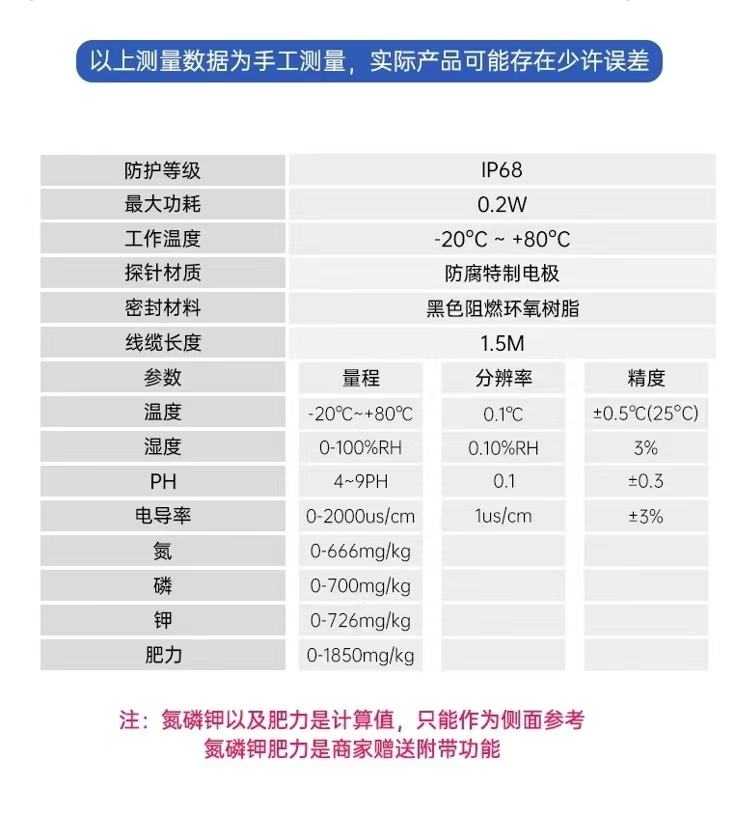
A 8-in-1 probe gives a reliable in-field indication for trend management. Use a laboratory analysis once or twice a year as the absolute reference, and the probe for the weekly decisions between them.
One per 1–2 hectares for open field; one per irrigation valve block for orchards. Consistency of location matters far more than the number of points.
Not under drip irrigation without a leaching event. Winter rainfall in the northern Gulf helps at the surface, but the wetting-front accumulation persists.